


Why you need data governance for AI-powered analytics

AI-powered analytics is transforming the way teams work and understand their products. Yet no matter how advanced the model or how intuitive the interface is, none of it works without one unglamorous ingredient: trustworthy data. That’s where data governance comes in.
It’s less about rules and more about alignment, control, and clarity. And in Mixpanel’s world, it is also about providing the context that both humans and AI need to interpret user behavior correctly.
In an era where AI technology can surface insights faster than humans can verify them, governance acts as a steady force that keeps every output reliable. With your teams relying on Mixpanel to make product decisions, governance isn’t a “nice to have”; it’s how you ensure those decisions are grounded in truth, not guesswork.
We’ll dive deeper into the role of data governance within AI-powered analytics features like the Mixpanel MCP server or Session Replay, why good governance matters, and how to set best practices so your AI insights aren’t hallucinations.
Governance isn’t red tape. It’s how teams build trust.
When you hear “governance,” you most likely imagine a process for the sake of process. But in practice, it’s the opposite. Governance is how teams stay aligned on what their data means, where it comes from, and how that data should be used.
At its core, modern data governance is really about ensuring teams speak the same language so they can answer the foundational questions:
- What does this metric represent?
- Which event matters and why?
- Who defines and maintains them?
When you’re unable to answer these questions, that’s when the data gets murky and your team starts wasting time fixing dashboards rather than surfacing actionable insights.
This alignment is what gives AI the context it needs to understand your users’ behavior instead of guessing at it.
"It’s like a feedback loop that feeds into itself. Let's say… governance is a problem, you fix it and have better governance projects, and then you’re able to take advantage of more data governance tools in the project, and then it keeps looping. But if you’re off track, then all your data is off as well and the AI tools are no help to you."
AI raises the stakes
Analytics already demands clean, consistent data. AI raises that bar.
When you introduce natural-language querying via an MCP server, automated insights, or predictive analytics, the smallest inconsistencies—like an unclear event name or duplicate properties—can become a blocker. AI needs structured, well-described data and context to reason with because it doesn’t just use your data but interprets, summarizes, and extrapolates from it.
Mixpanel Staff Product Manager Sharan Multani shared his thoughts on this symbiotic relationship in a recent Behind the Data interview. “When you have natural language querying, the quality of your event taxonomy becomes even more critical because the AI is only as good as the metadata it's working with,” he explained.
A practical example
Imagine you’re using the Mixpanel MCP server to ask a simple question like, “How many users signed up this week?” You expect a simple answer. But behind the scenes, it's more complicated than that since the model has to decide what event represents “signup.” If your data contains three different versions (“signup”, “sign_up”, and “UserSignUp”), then the model doesn’t know which one you meant. Instead, it may take an average, pick one at random, or rely on the most recent event. Either way, that’s how you end up with AI-generated insight that looks polished but is built on the wrong version of reality.
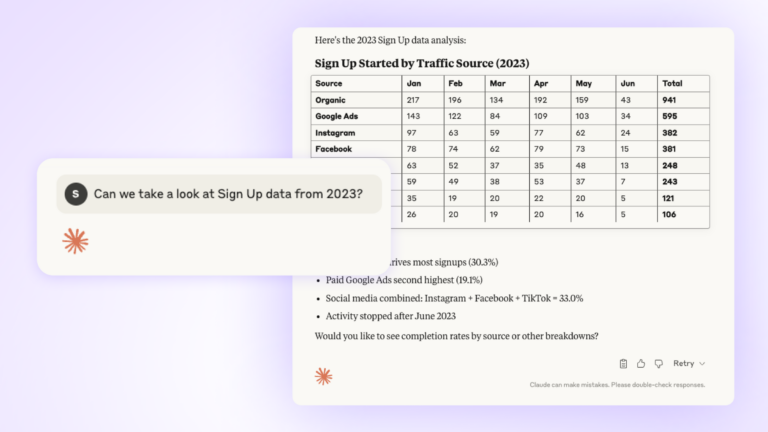
While AI is still learning, the problem is the ambiguity behind the data. “AI only accelerates that reality: garbage in, garbage out,” Sharan added. And, he’s not wrong.
In a system like this, trust can erode slowly. You begin to question and check the AI-generated answers with manual queries, pulling raw data into spreadsheets “just to be sure.” And the promise of AI—faster insights, less friction, more clarity—falls flat because the foundations weren’t solid to begin with.
Quick test: Is your data AI-ready?
AI-powered analytics only works when your underlying data has enough clarity, consistency, and context for the model to reason with. If any of these patterns below feel familiar, that’s a signal your team may be struggling to get trustworthy answers.
- You have multiple events describing the same action (“Purchase_Completed” vs. “OrderPurchased”).
- A large amount of events within Lexicon lack descriptions.
- Different teams maintain different definitions of core metrics, like Activation or DAU.
- It’s unclear who owns the key events.
- You regularly end up in alignment meetings to discuss what a metric really means.
- You or your executive team have to re-run an AI answer manually “just to be sure.”
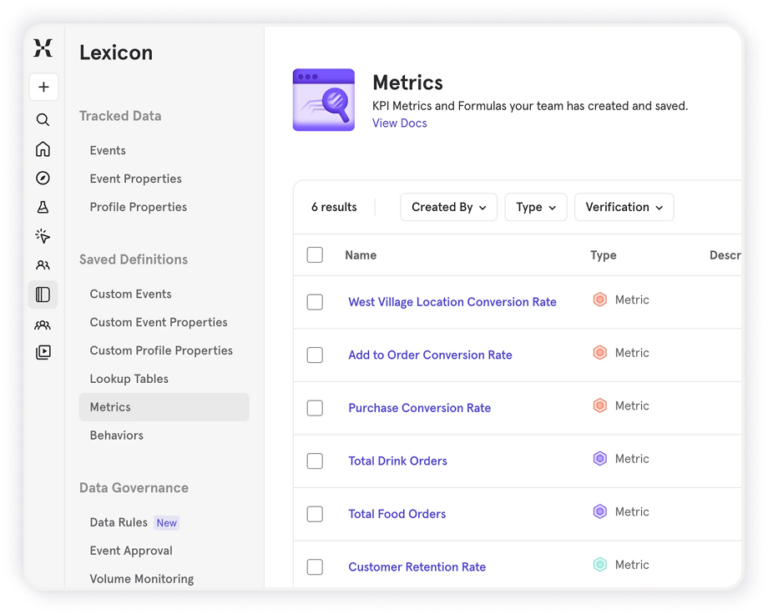
If these patterns feel familiar, the good news is that none of them require a massive governance overhaul, just the right structures, ownership, and context layers that Mixpanel is designed to support.
A practical, lightweight way to start
The good news is that AI doesn’t require perfect data, just consistency and context. And consistency can be achievable without spinning up an elaborate governance program. A few simple habits, supported by Mixpanel features, can go a long way toward keeping your data consistent and your insights trustworthy.
- Define your core events and metrics: Align on your team’s key signals—like User Signed Up or Activation Event—that actually define how people use your product.
- Document the meaning behind those events: A quick description in Lexicon gives both humans and AI the context they need to interpret data correctly.
- Decide who owns what: Clear ownership helps keep data tracking intentional and transparent; assign a team member to maintain an event in Lexicon.
- Review changes before they go live: Utilize Event Approval to review and approve new events so your dataset stays coherent without slowing engineering down.
- Revisit your definitions as the product evolves: As features change, Data Standards and Lexicon metadata make it easy to update names, descriptions, and owners so your AI has the latest context layer.
A practical example
And context isn’t just something you document—sometimes you can watch it. If your team has Session Replay enabled, Mixpanel automatically surfaces replays inside Lexicon and event previews, along with AI-powered summaries that highlight the “so what” behind user behavior in seconds. With good governance practices like those above in place, these insights are uniquely accurate and trustworthy, enabling you to move faster from understanding to action.

Together, these habits act like small guardrails that keep your data clean, your AI confident, and your teams moving fast without tripping over avoidable ambiguity.
Clarity today, confidence tomorrow
As AI becomes a bigger part of how teams explore and understand their data, context becomes non-negotiable. Data governance is what creates that context —shared definitions, consistent tracking, and signals AI doesn’t have to interpret or correct. When your data is aligned, AI-powered analytics features can focus on surfacing patterns and answering real product questions, not untangling duplicate events or outdated metrics.
This is what leads to faster decisions and insights your teams trust. Governance isn’t overheard; it’s the quiet system that keeps your AI grounded in reality. And when your data is clear and rich in business context, your AI becomes something teams can rely on, not something they need to double-check.
"Mixpanel is magical when it comes to finding answers to your questions with a well-structured data governance setup. The Omtera team helped us set up and establish that stack…I received feedback from my colleagues saying, 'This is the best tool I've used in my work life.'"
Start on the right foot today: Learn how to incorporate Mixpanel’s data governance toolkit into your projects.