

Why I joined Mixpanel as CTO

A little less than a year ago, I was coming off the high of a phenomenal run at Included Health. Over my 5+ years there, the company grew 5x in revenue, and the engineering organization scaled to match. It was the kind of ride that leaves you both proud and exhausted.
At the same time, the industry was changing rapidly due to AI, and I knew this transformation would continue as AI becomes more deeply integrated into our systems. So after leaving Included Health, I took some time to rest, reflect, vibe code a couple of apps, travel the world, and decide what would be next for me.
When exploring a new role, I considered: mission (and how AI will impact it), technical challenges, and market opportunity alongside personal growth and people.
I joined Mixpanel as CTO in January 2026. Let me tell you why.
Helping every company build better software
"Software is eating the world."
That was the rallying cry of the last era. The reality we’re facing now is that AI might be eating software.
I've spent the last year exploring and analyzing what that means. I'm not interested in the architectural debates—whether foundation models solve everything or get commoditized. Rather, I’m more interested in what will be true regardless of how the technical details shake out.
Three things have become clear to me:
- Product sense becomes infinitely more valuable.
AI makes building cheaper and faster. You can generate features, spin up experiments, and create variants at speeds that were impossible before. But when you can ship 10x more, how do you know what's actually good? The companies that figure this out will dominate. The ones that don't will drown in their own output.
- Products stop having "flows."
Today, users go through a small set of predefined experience paths. Tomorrow, every user gets something deeply personalized and sometimes it's done by an agent on their behalf. You're not designing a few pre-determined journeys anymore; you're orchestrating thousands of unique experiences simultaneously.
- We need deterministic answers for probabilistic systems.
AI models are probabilistic engines. They deal in likelihoods, not certainties. But the businesses building on top of them need certainty. Did the agent actually solve the user's problem, or did it just chat politely? As the software layer becomes more fluid and non-deterministic, the measurement layer must provide the absolute ground truth of what actually happened.
This creates a chaotic environment for builders. As a wise man once said:
"The signal is the truth. The noise is what distracts us from the truth."
These beliefs point somewhere specific: The companies that help businesses find the signal—the deterministic truth about what customers want to do and whether their AI is working—will be extraordinarily valuable.
That’s Mixpanel.
The mission is helping every company build products that actually work for their users. That might sound simple, but in a world where AI is reshaping how software is built and experienced, it’s foundational infrastructure. I believe better software makes society work better, at scale, and this is even more true and valuable in the world of AI.
Technical challenges that excite me
The technical problems here are legitimately fun.
We aren't starting from scratch. Mixpanel already has the foundation to capture this moment, supporting more than 29,000 customers globally and processing billions of events at scale every hour. We possess more than a decade of behavioral data—billions of interactions across every industry—and that is a compounding advantage that gets stronger over time.
But the next phase involves challenges that genuinely don't have playbooks yet:
- Semantic understanding: We’re building a semantic understanding of product behavior—teaching systems to know what "activation" means for entirely different businesses.
- Human + agent: We’re building for both human PMs and AI agents simultaneously.
- New primitives: We’re inventing measurement primitives for product categories that don't fully exist yet.
This is a multi billion-event scale infrastructure work. It requires deep engineering rigor to separate the signal from the noise when the volume of "noise" (generated content) is about to explode.
The 18-month window to win
I believe the next generation of companies with outsized returns will be the ones that become the infrastructure that makes AI products work.
When I look at Mixpanel, I see all of it: mission, technical depth, and financial opportunity positioned right at the center of where software is going. The window to define this category is finite, maybe 18–24 months before the market hardens around winners.
When talking to the Mixpanel team, the opportunity to make an impact reminded me of stories I heard about during my early days at Uber. The mission is enormous, the team is strong, and I can see a myriad of ways to have impact while being proud of what we're building.
Help us build the infrastructure for what’s next
In a few years, we will have built a platform that enables companies around the world to build exceptional AI products. To make that happen, we have some team-building to do because the opportunity demands we grow what's already a strong foundation.
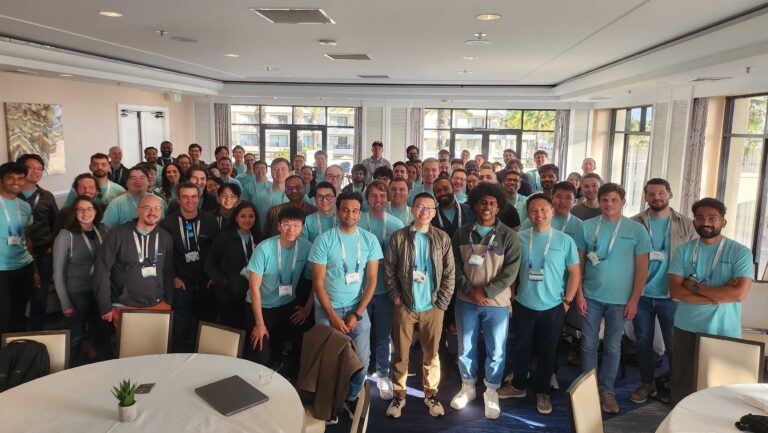
I've been blown away by the people already here: humble, hungry, and smart, who genuinely believe better software makes the world work better. The foundation is strong. Now we need to grow it.
We’re hiring across the board in engineering. We need builders who are excited about high-scale infrastructure, semantic data understanding, and defining the toolset for the next era of software. If this resonates with you and you're interested in learning more, please reach out to me on LinkedIn or check out our careers page for open roles. I truly believe this is like hearing about Uber in 2012—the more deeply you explore it, the more strongly you see it.